

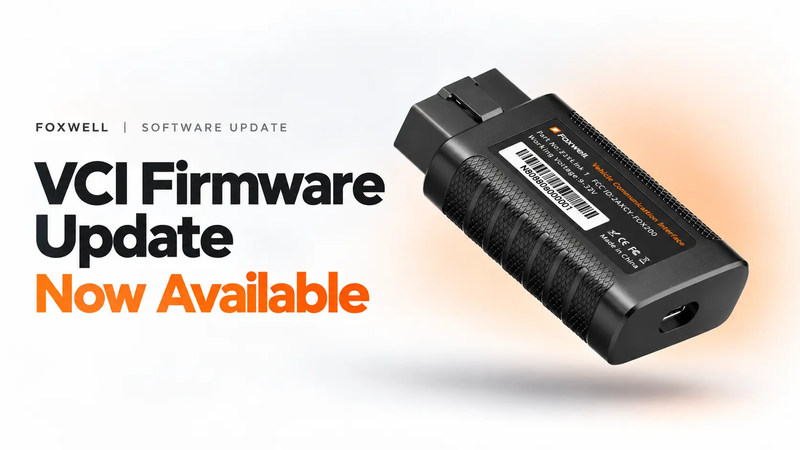
Important FOXWELL VCI Firmware Upgrade Notice
FOXWELL released a major VCI firmware upgrade to enhance vehicle connection stability, diagnostic efficiency and user experience. Users should connect the device to stable Wi‑Fi, enter the [Update]...

P0507 Code: Meaning, Causes, Symptoms & How to Fix It
The P0507 code indicates that your engine is idling higher than expected. Common causes include vacuum leaks, throttle body problems, and incorrect idle settings after maintenance. This guide cover...

Foxwell NT919 BT FAQs: Everything You Want to Know
Find answers to common Foxwell NT919BT questions, including lifetime free updates, vehicle compatibility, bi-directional tests, FCA AutoAuth, topology mapping, ES100 support, and model comparisons.
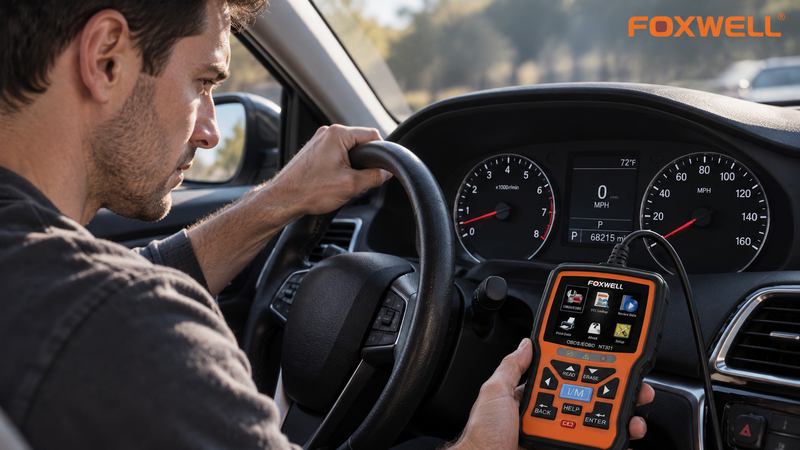
Misfire But No Check Engine Light: What to Check Next
Can your engine misfire without a check engine light? Yes. Intermittent misfires may cause rough idling, hesitation, or reduced power without triggering a warning. This guide explains common causes...

What’s New in Foxwell Scanners? September 2026 Upgrades Unveiled
See what’s new in the Foxwell September 2026 software update, including expanded vehicle coverage, new special functions, improved diagnostic performance, 2026 model support, and bug fixes across m...

Injector Coding Failed: Causes and How to Fix It
Learn why injector coding fails and how to fix incorrect codes, cylinder selection errors, ECU communication issues, and low battery voltage. Follow the steps to verify successful coding and diagno...
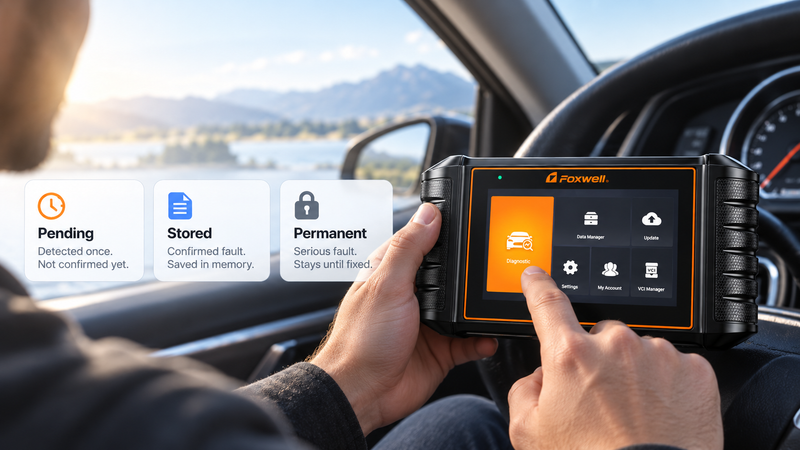
What Does a Pending Code Mean? Stored vs Pending vs Permanent DTCs
A pending code means your vehicle has detected a potential fault, but the issue has not yet met the criteria to become a confirmed DTC. This guide explains the differences between pending, stored, ...
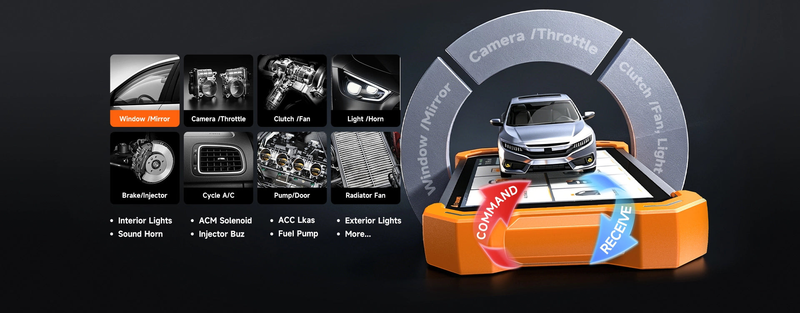
What Can a Bidirectional Scan Tool Do? 10 Active Tests You Can Actually Use
Bidirectional control lets a scan tool command supported vehicle components and check how they respond. Common active tests include ABS pumps, fuel pumps, injectors, EVAP valves, cooling fans, EGR ...

What’s New in Foxwell Scanners? August 2026 Upgrades Unveiled
Foxwell's August software update brings expanded vehicle coverage, support for 2026 models, new special functions, AI fault code assistance, software structure optimizations, and performance improv...
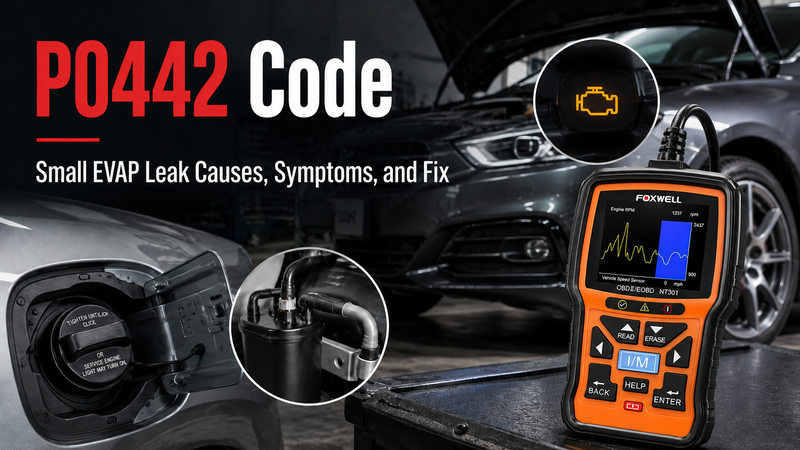
P0442 Code: Small EVAP Leak Causes, Symptoms, and Repair Cost
This guide explains what the P0442 code means, the most common causes and symptoms of a small EVAP leak, how to diagnose the problem, and the steps used to fix it. It also covers repair cost, repai...

Why Does My Steering Wheel Shake at High Speeds? Causes & Fixes
A shaking steering wheel is often caused by tire imbalance, damaged wheels, brake issues, worn suspension parts, or sensor-related faults. Learn how to diagnose steering wheel vibration at 50, 60, ...
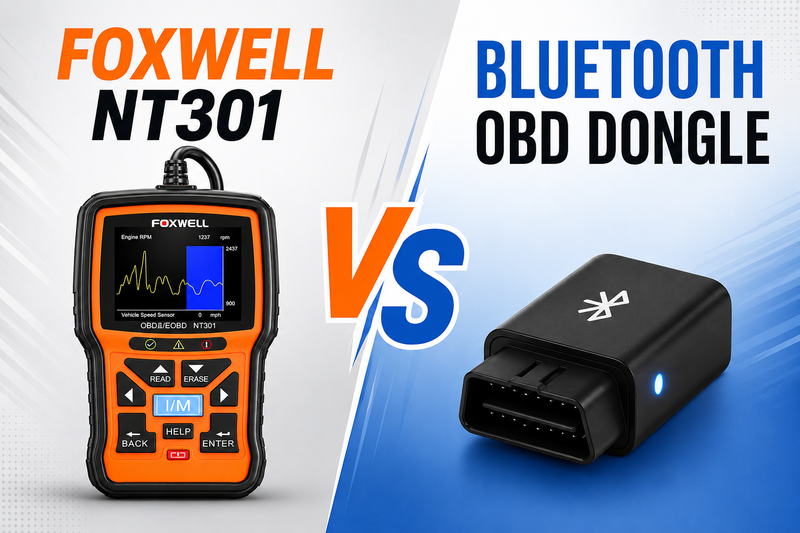
What is the difference between FOXWELL NT301 and a Bluetooth OBD dongle
FOXWELL NT301 and Bluetooth OBD dongles can both help drivers read vehicle trouble codes, but they offer different diagnostic experiences. The NT301 provides a standalone, plug-and-play solution wi...
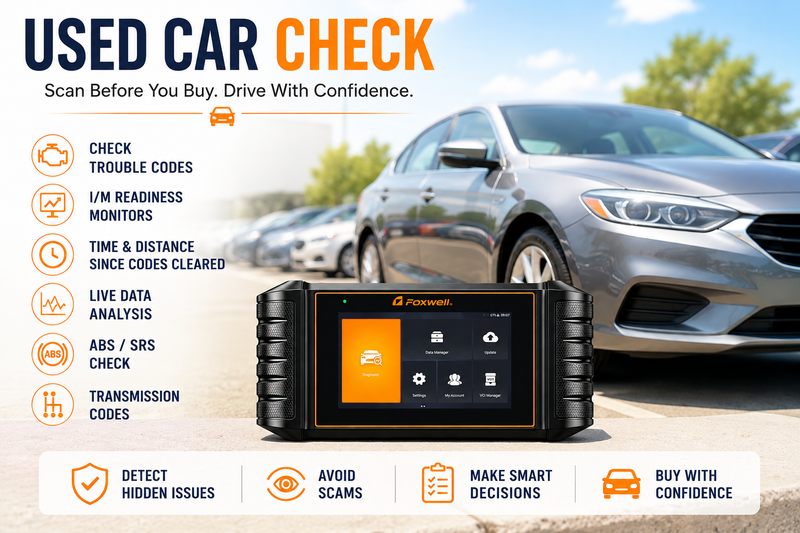
How to Use an OBD2 Scanner When Buying a Used Car (And Avoid Getting Scammed)
Learn how to use an OBD2 scanner when buying a used car. This guide explains how to check stored and pending codes, I/M readiness monitors, live data, and signs of recently cleared codes to uncover...

BMW Rough Idle After Clearing Adaptations? Here’s the Fix
A rough idle after resetting BMW DME adaptations is normal and temporary—it simply resets learned wear compensations to factory defaults. To fix it, let the engine idle untouched for 10–15 minutes ...

P0174 Code: System Too Lean (Cylinder Bank 2) — Causes, Fixes, and Cost
P0174 means your engine is running too lean on Bank 2, usually due to a vacuum leak, MAF sensor issue, or fuel delivery problem. This guide covers symptoms, causes, diagnosis steps, repair costs, a...

Foxwell NT919 BT Review: Automotive Bidirectional Scanner with ECU Coding & Active Tests
Foxwell NT919 BT is a professional bidirectional diagnostic scanner with full-system diagnostics, 3,000+ active tests, 34+ service functions, ECU coding, CAN FD, and DoIP support. Learn features, s...

What’s New in Foxwell Scanners? July 2026 Upgrades Unveiled
Foxwell's July software update brings expanded vehicle coverage, support for 2026 models, new special functions, AI fault code assistance, diagnostic optimizations, and performance improvements acr...

How to Diagnose a Bad PCV Valve: Testing, Symptoms & OBD2 Scanner Guide
A bad PCV valve can cause rough idle, oil leaks, poor fuel economy, vacuum leaks, and check engine light warnings. Learn how to diagnose PCV valve problems using physical inspection, vacuum testing...
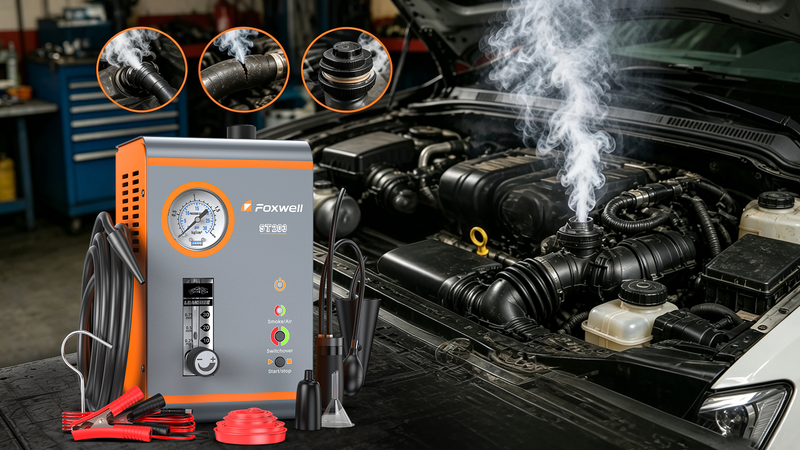
How To Perform A Smoke Test with an Automotive Smoke Machine
Learn how to use an automotive smoke machine to find EVAP leaks, vacuum leaks, and intake system issues. This complete guide covers smoke test procedures, common trouble codes like P0455 and P0456,...
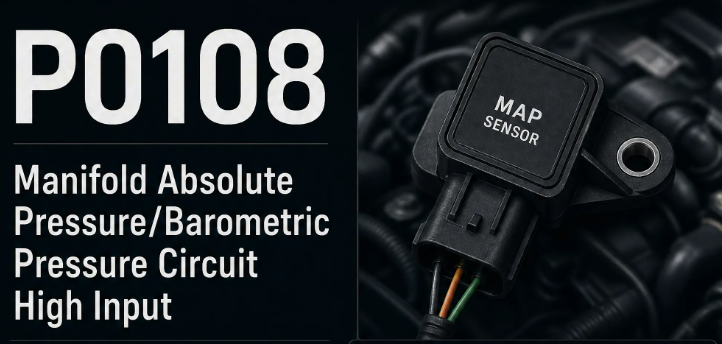
How to Fix P0108 Code: Manifold Absolute Pressure Circuit High Input
P0108 is an OBD-II trouble code meaning "Manifold Absolute Pressure/Barometric Pressure Circuit High Input." It sets when the MAP sensor signal voltage exceeds about 4.5 volts for 10+ seconds, high...

P0107: Manifold Absolute Pressure (MAP) Sensor Circuit Low Input
The P0107 code indicates a MAP sensor circuit low input issue, where the ECM/PCM receives a lower-than-expected voltage signal. This guide covers common causes, symptoms, diagnosis steps, repair me...
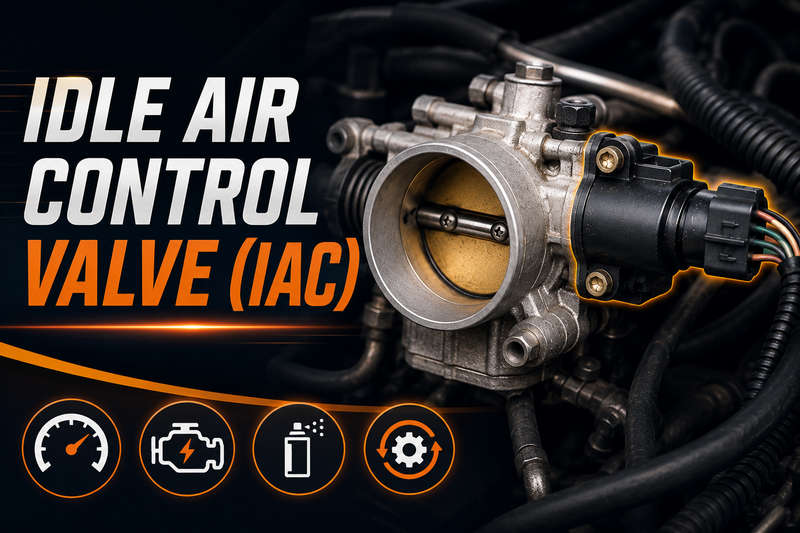
Idle Air Control Valve (IAC): Symptoms, Testing, Cleaning, Replacement & Reset Guide
A faulty idle air control (IAC) valve can cause rough idle, engine stalling, fluctuating RPM, hard cold starts, and a check engine light. This guide explains how the IAC valve works, the most commo...

Foxwell NT809TS TPMS scan tool FAQ: Compatibility, Functions & TPMS Service
This complete Foxwell NT809TS FAQs answer all pre-purchase and post-purchase buyer questions, organized by user shopping decision funnel.

P0496 Code: EVAP Flow During Non-Purge Condition
P0496 is an OBD-II trouble code indicating the EVAP system is purging fuel vapors when the ECM has commanded it to stop. The most common cause is a faulty canister purge valve, followed by a loose ...